

About us

Longer life, lower emissions, fewer critical raw materials, less dependence on overseas sources

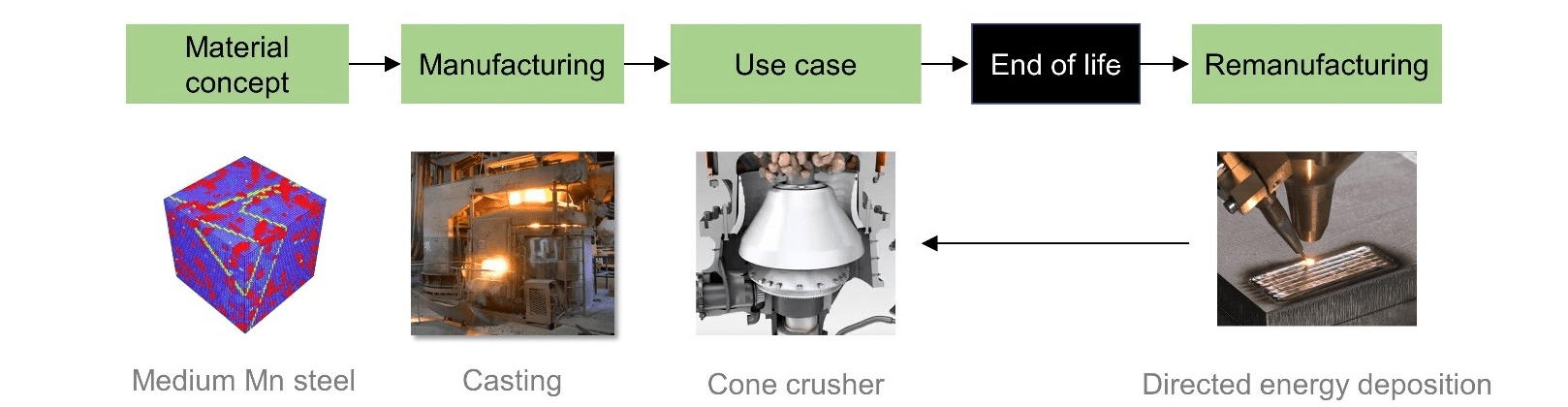
SUMMSEED is a European research project focused on developing a new generation of sustainable medium-manganese steels for heavy industry and mining. By tailoring alloys for both casting and directed energy deposition (DED) remanufacturing, the project aims to replace traditional Hadfield steels with leaner, more cost-efficient grades that offer high strength, toughness and wear resistance while reducing CO₂ emissions and the use of critical raw material

Bringing together universities, technology centres and industrial partners, SUMMSEED covers the entire value chain—from alloy design and laboratory testing to pilot casting trials and the repair of real cone crusher components—laying the foundations for a circular, low-carbon steel ecosystem that keeps high-value parts in service for longer.

SUMMSEED in numbers

CO2 reduction
12 %

Potential reduction in greenhouse gas emissions through sustainable MMn steels and remanufacturing strategies.

Less Mn
> 1 wt.%

Reduced Mn vs. Hadfield steels, lowering costs and critical-material dependence.

Improved wear resistance
> 8 %

Expected gain in wear resistance vs. current Hadfield steels used in mining components.

25-35%

Lower lifecycle costs

Estimated reduction in lifecycle costs for remanufactured mining components compared to purchasing new parts.

Longer component lifetime
> 6 %

Increase in lifespan for remanufactured cone crusher components thanks to the new medium-Mn steels.

TRL 3 TRL 5

Technology readiness level

Advancing medium-Mn steels for casting and DED from early-stage research to validated pilot-scale applications.

To design a medium manganese steel (MMnS) tailored to the production conditions of casting and directed energy deposition

To develop an optimal processing window for casting and directed energy deposition.

To demonstrate the viability of the developed MMnS material for remanufacturing

To achieve the performance property requirements through a novel industrially-oriented processing route.

To prove the economic viability of this novel approach towards future industrial scale implementation. 

Project Partners

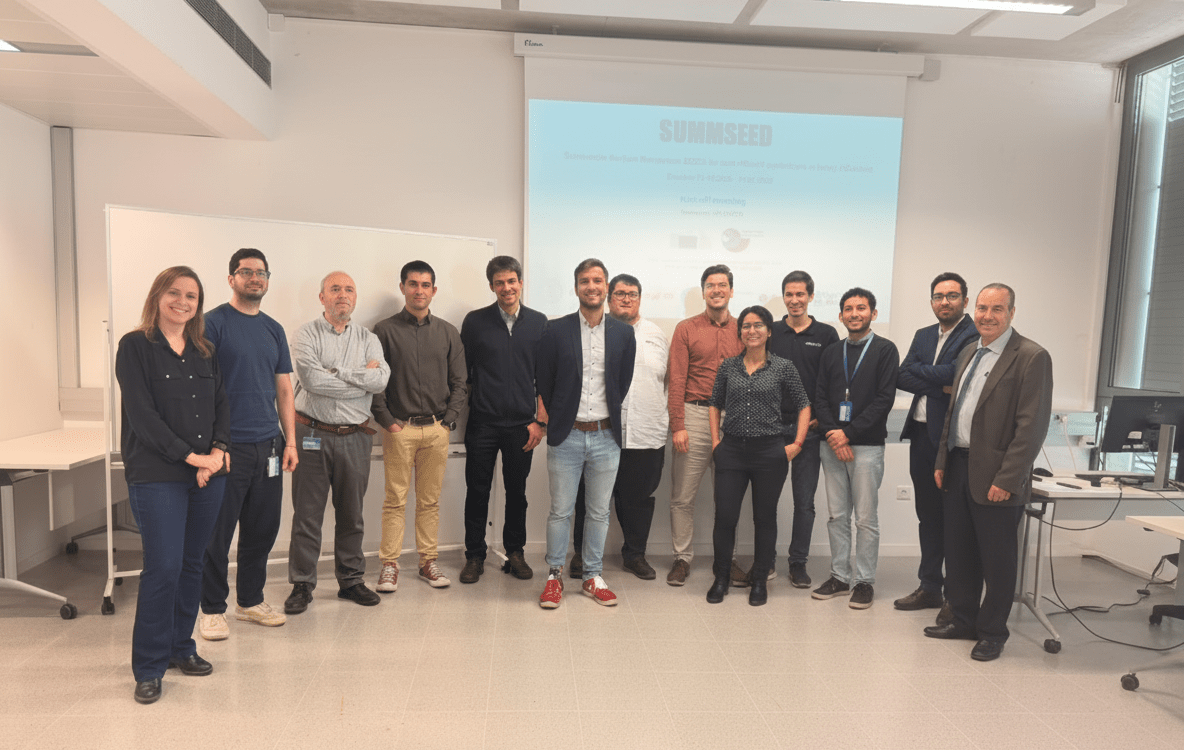
SUMMSEED brings together leading universities, research centres and industrial companies that cover the full value chain—from alloy design to industrial demonstrators.

Progress beyond the state-of-the-art

New Steel grades

Computational materials combined with advanced characterization techniques such as in situ synchrotron methods to go beyond the current knowledge in Mn steels.

Industrial processing guidelines

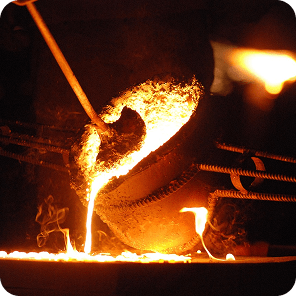
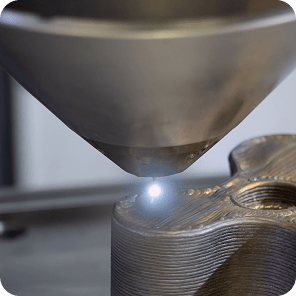
Application of Medium-Mn steels to near-net shape processing of bulk products by casting and directed energy deposition (DED) implemented for the first-time.

New steps to offer an overall lower processing cost and a reduction of the carbon footprint compared to Hadfield steels. Novel heat treatment protocols for efficient microstructure adjustment.

Mining use case: cone crusher

SUMMSEED responds the need of satisfying the high-volume production and reparation of steel parts in the mining industry to reduce the lead time, the total lifecycle cost of equipment contributing to environmental sustainability.

Remanufacturing worn, or damaged Mn steel parts by DED will be pioneered, by developing dedicated DED material feedstock, extending their service life and promoting resource conservation.

Expected impact

By combining leaner alloy design with near-net-shape manufacturing and remanufacturing, SUMMSEED supports the European Green Deal objectives of a low-carbon, resource-efficient steel and mining sector.

Environmental impact

30% potential reduction in CO₂ emissions through lower alloy content, reduced energy demand and systematic remanufacturing instead of replacing parts. Large reductions in waste and increased use of scrap and recycled material.

Economic and industrial impact

Lower alloying and processing costs, longer component lifetimes and 25–35% lower lifecycle costs for remanufactured mining components compared to new parts. Stronger competitiveness for European steelmakers and mining suppliers.

Strategic impact

Reduced dependence on critical raw materials and volatile manganese markets, reinforcing Europe’s industrial resilience.

Scientific and societal impact

New knowledge on MMn steels, advanced characterization and modelling, plus safer, more automated processes and new skilled jobs in remanufacturing and circular steel value chains.